Trump Gold Card Launch: What High-Net-Worth Investors Need to Know in 2025

Introduction: A New Era of Wealth-Based U.S. Residency
On December 10‑11, 2025, the Trump administration officially launched the Trump Gold Card program, introducing a new pathway to U.S. permanent residency for high net worth individuals. Unlike traditional investor visas like EB‑5, this initiative is contribution based rather than tied to job creation or business operations.
This program represents a significant shift in U.S. immigration policy and offers wealthy investors a fast track residency option but it also comes with unique compliance considerations and potential legal uncertainties.
Key Features of the Trump Gold Card Program
The Gold Card program allows foreign nationals to obtain U.S. lawful permanent residency by fulfilling specific financial obligations:
Individual Contribution: $1 million to the U.S. government, plus a $15,000 processing fee
Corporate Sponsorship Option: $2 million contribution per employee for corporate applications
Family Inclusion: Spouse and unmarried children under 21 may be included, with separate fees and contributions
Potential Platinum Tier: Expected $5 million contribution with added benefits (currently in waitlist)
This model removes traditional EB‑5 requirements such as job creation or TEA designation, making it an attractive option for investors prioritizing speed and simplicity.
Why the Gold Card Program Matters
The Gold Card is a strategic tool designed to:
Attract global capital and talent to the U.S.
Provide a fast-track residency option for ultra-wealthy individuals
Generate billions in government revenue, supporting broader economic initiatives
While this approach may appeal to investors seeking rapid U.S. residency, it is controversial because it effectively creates a wealth-based immigration track, raising questions about fairness and legal authority.
What Investors Should Know About Legal and Regulatory Risks
Experts have highlighted potential challenges:
Congressional Authority: The program’s legality is being debated, as creating new visa categories may require legislative approval
Two-Tiered Immigration Concerns: Critics argue it favors the ultra-wealthy, diverging from merit- or employment-based pathways
Ongoing Legal Reviews: Future court rulings could affect program continuity, approval timelines, or contribution requirements
Investors should stay informed and consult immigration counsel before initiating applications.
How the Program Differs From EB-5
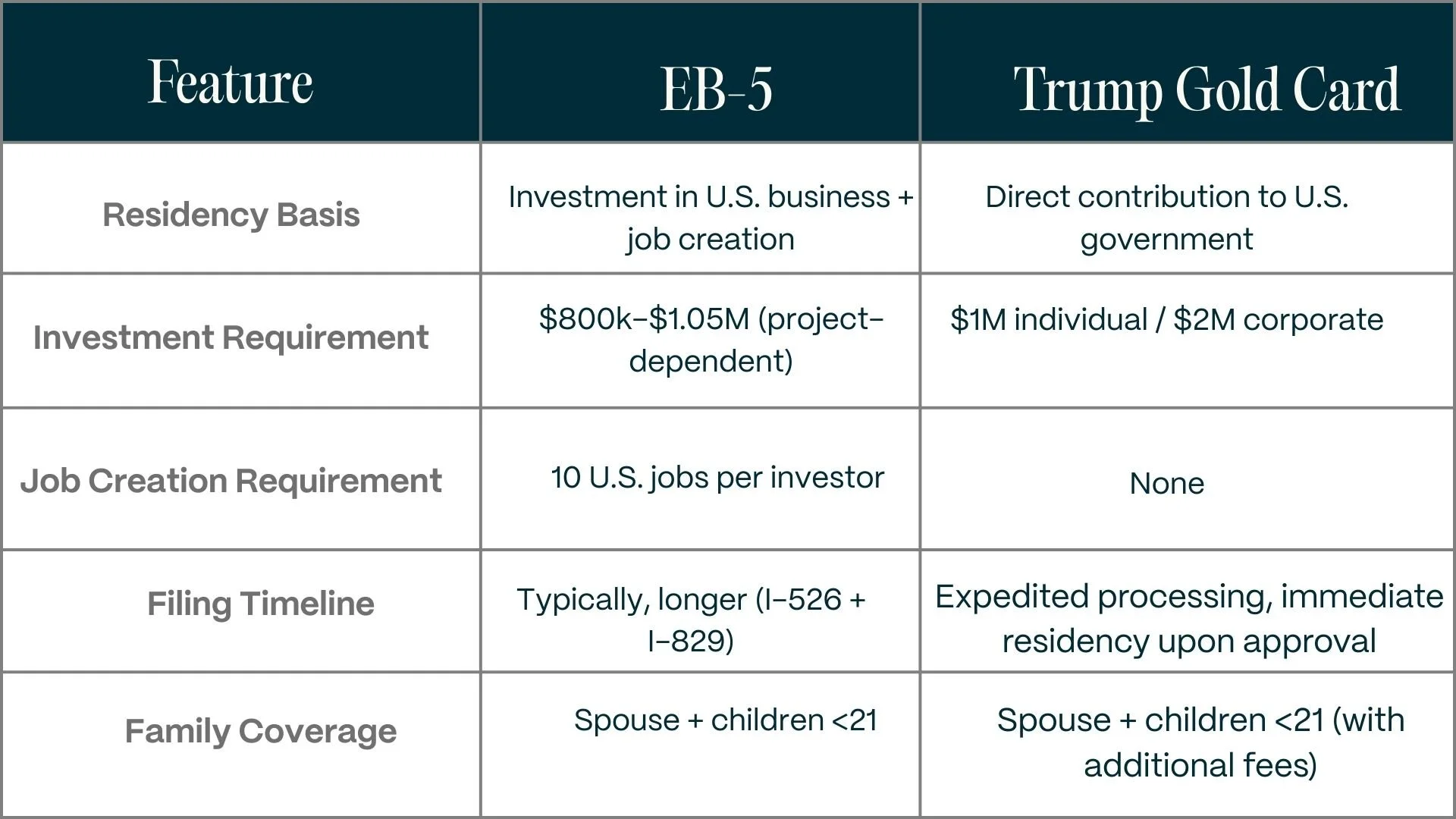
This table helps illustrate why high-net-worth investors might choose the Gold Card over traditional EB‑5 primarily for speed and simplicity.
Who Should Consider the Trump Gold Card
The program targets investors who:
Can commit $1 million (or $2 million corporate) in direct contributions
Want immediate residency without managing business operations or job creation
Are seeking residency for family members along with personal immigration benefits
Are prepared for legal scrutiny and potential policy changes
Investor Checklist Before Applying
Before committing, investors should confirm:
Total financial obligations (contribution + processing fees)
Eligibility for family members under the program
Regulatory updates and potential legal challenges
Consultation with a qualified U.S. immigration attorney
Arcasia Advisors Insight
As USCIS amplifies project-level enforcement, selecting a compliant, well-structured EB-5 investment has never been more critical. At ArcAsia Advisors, we help investors evaluate project fundamentals, assess developer strength, and prepare filings that align with the evolving adjudication standards expected in 2026.
Disclaimer
This article is for informational purposes only and does not constitute legal or financial advice. Investors should seek independent professional guidance before making any immigration or investment decisions.